
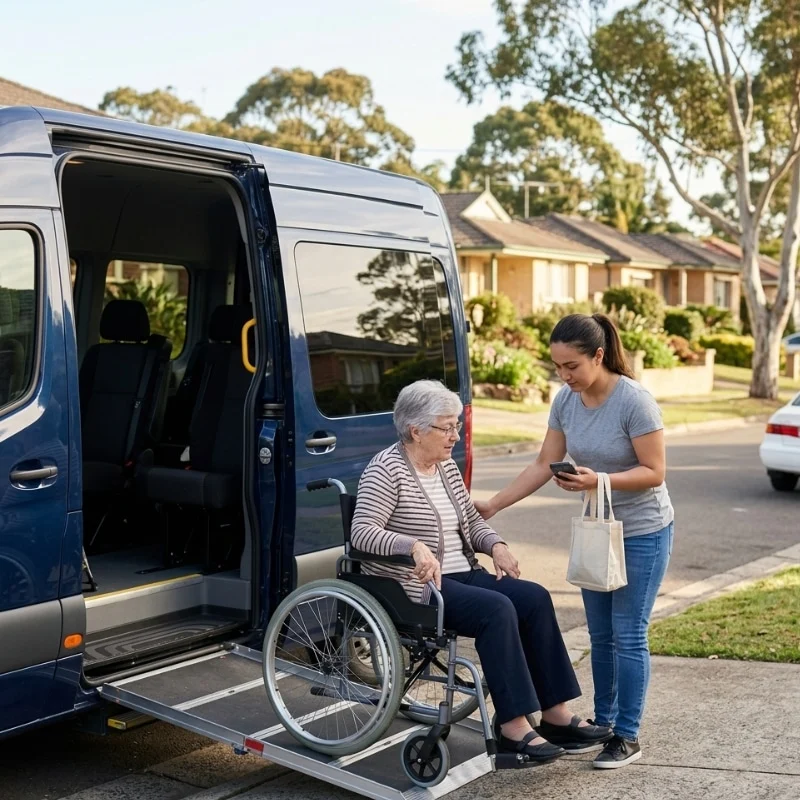
Reliable travel is one of those “small” things that quietly shape everything else. When getting to appointments and community activities runs smoothly, you can keep routines, protect your energy, and show up more confidently. When it doesn’t, missed sessions, stress, and last-minute scrambling can quickly pile up.
This guide is designed for NDIS participants, families, and carers who want a repeatable system for getting from A to B more reliably in Sydney conditions (traffic, peak hour, appointments that run late, and all the curveballs that come with real life). You’ll find simple planning steps, checklists you can reuse, and practical backup options so you’re not reinventing the wheel every week.
What “reliable travel” actually means
Reliable doesn’t always mean “perfectly on time” every time. In real-world Sydney travel, reliability usually means:
• You have a clear plan for getting there and getting home
• Accessibility needs are considered before the day (not at the kerb)
• Everyone knows the key details (pickup, escort needs, equipment, waiting rules)
• You have a backup option if Plan A falls through
• You’ve built in buffer time, so traffic or delays don’t automatically become a crisis
• You reduce stress by making the routine predictable and consistent
If you can get most trips to feel predictable and manageable, you’re doing the “reliable” part well.
Start with your weekly travel map
Before you plan individual trips, map your week on one page. This helps you spot patterns (like two appointments too close together) and makes planning easier.
Write down:
• Appointment/activity name
• Address and suburb
• Day/time (and expected duration)
• Accessibility needs (mobility aids, stairs, distance from drop-off)
• Support needs (escort, supervision, communication support)
• “Hard start” or “flexible start” (some clinics won’t hold the slot, others can)
• Preferred arrival time (often 10–15 minutes early unless the clinic says otherwise)
Then group trips into:
• Regular repeats (weekly physio, psychology, hydrotherapy, social groups)
• One-offs (specialist consults, plan meetings, assessments)
• High-stakes trips (time-critical, complex support needs, high fatigue impact)
This “weekly travel map” becomes the foundation for everything else.
Q&A: How early should I arrive for appointments in Sydney?
Aim to arrive 10–15 minutes early for most appointments, but build a larger buffer for high-traffic areas, hospital precincts, and unfamiliar sites. If parking, building access, or check-in is complicated, plan for 20–30 minutes. The goal is to protect your appointment time without rushing your body or your supports.
Build your timing buffers (Sydney-proofing)
Sydney travel time can change dramatically depending on:
• Peak hour (especially weekdays)
• School zones and school pickup times
• Roadworks and weekend events
• Rain (often slows everything down)
• Hospital precinct congestion and parking queues
A practical approach is to set two time estimates:
• “Normal day” travel time
• “Sydney reality” travel time (your buffer version)
Then add these buffers:
• Ready time buffer: add 10–15 minutes for getting out the door (or more if mornings are tough)
• Loading buffer: allow extra time for mobility aids, transfers, or equipment
• Building buffer: lifts, long corridors, security desks, check-in
• Traffic buffer: add 15–25% to typical travel time (more for cross-city trips)
If you’ve had trips where stress spikes on the way in, your buffer is too tight. Tight buffers create a chain reaction: late pickup → rushing → dysregulation → harder appointment → harder trip home.
Create a simple Plan A / Plan B / Plan C
A reliable system always includes a fallback. The trick is deciding the backup before you need it.
Plan A: your preferred routine
This might be:
• A support person driving
• A booked transport option
• Public transport on familiar routes with accessible stations
Plan B: your “still works” alternative
This could be:
• A different pickup time window
• A different route (avoid known bottlenecks)
• Taxi/rideshare when appropriate
• Rescheduling to telehealth when suitable (if the provider allows)
Plan C: your “protect the essentials” option
Plan C is for days where things go sideways:
• Cancel or reschedule early to avoid fees
• Attend only the most important appointment and move the rest
• Switch to a low-demand activity instead of a high-demand outing
• Ask the provider for a late arrival plan (some clinics can adapt, some can’t)
Write your Plan A/B/C rules down so everyone follows the same playbook.
Q&A: What do I do if the trip falls through at the last minute?
Use a decision tree:
• Is the appointment time-critical or flexible?
• What’s the stress cost of forcing it today?
• Can you arrive within an acceptable window?
• Is telehealth an option?
• If you can’t get there safely and calmly, reschedule early and log what happened so you can improve the plan next time.
Reliability improves when you respond consistently, not when you push through every disruption.
The “Trip Brief”: one page that prevents confusion
Many travel problems happen because key information is scattered across texts, notes, and memory. A Trip Brief is a one-page summary you can reuse.
Include:
• Participant name and preferred communication style
• Address, pickup point details (gate code, level, landmark)
• Emergency contact
• Mobility aids/equipment (walker, wheelchair, oxygen, bags)
• Transfer and handling notes (only what’s relevant and safe)
• Sensory needs (quiet ride, minimal conversation, music preferences, headphones)
• Health/safety notes (seizure plan basics, allergies, fatigue triggers)
• “If running late” preference (call vs SMS, who to contact)
• Waiting rules (how long the driver/support should wait, and what to do next)
If multiple people support travel, the Trip Brief keeps everything consistent.
Reduce missed appointments with a readiness checklist
Use this the night before and the morning of travel.
Night before
• Confirm appointment time and address
• Pack essentials (IDs, Medicare card, referral letters, water, snacks)
• Charge phone and any devices
• Set out clothing and mobility aids
• Confirm any medications required before leaving
• Check if the location has tricky access (parking, stairs, long walk)
Morning of
• Eat/drink enough for the trip (if possible)
• Toileting plan (especially for longer travel)
• Pack sensory supports (headphones, sunglasses, fidget, comfort item)
• Leave early enough to protect the buffer
• Quick message check-in with the support person (if relevant)
A checklist is not about being rigid. It’s about reducing the number of things your brain has to hold at once.
Accessibility: plan the “last 50 metres”
Sometimes the hardest part isn’t the drive or train ride. It’s the last 50 metres: the kerb, the stairs, the lift that’s out, the long corridor, the crowded waiting room.
Before a new location, find out:
• Is there step-free access from the drop-off to the reception?
• How far is the walk from accessible parking or drop-off?
• Are there lifts, ramps, and automatic doors?
• Is the waiting area quiet or crowded?
• Can you wait outside or in a calmer space?
If public transport is part of your plan, accessible stations, lift outages, and platform gaps can matter. If a route regularly creates stress, it’s a sign to adjust the routine, not a sign you’ve failed.
Q&A: Should I avoid peak hour in Sydney?
If you can, yes. Peak hour increases unpredictability, noise, crowding, and stress. If you can’t avoid it, build stronger buffers and consider sensory supports (headphones, sunglasses, predictable seating), plus a calmer transition plan at the destination.
Make communication boring (that’s the goal)
Reliable travel gets much easier when communication becomes standardised. Try these simple message templates.
“Day before” confirmation
- “Hi, confirming tomorrow: pickup at X, appointment at Y, prefer to arrive by Z. Please text if anything changes.”
“Running late” message
- “Running 10 minutes behind. New ETA is __. Please confirm if that still works.”
“Appointment running over” message
- “Appointment is running over. Likely finish time __. Can you adjust pickup to __?”
“Can’t make it today” message
- “We can’t attend today due to __. Please advise the next available appointment.”
This reduces anxiety because everyone knows what information to expect.
Track what works with a simple travel log
A travel log is a quiet superpower. Keep it simple:
• Date and trip type
• What worked well
• What didn’t (late pickup, parking, lift outage, fatigue crash)
• What you’ll change next time (earlier pickup, different route, different waiting plan)
Over time, you’ll identify patterns: which clinics always run late, which days are too stacked, which routes are overstimulating, which handovers need tightening.
When travel planning needs extra support
Some situations genuinely require a higher level of planning and support, especially when safety is involved. Consider stronger supports and clearer safeguards when:
• There’s medical instability (risk of fainting, seizures, oxygen requirements)
• There are complex manual handling needs
• The person is at risk of absconding or becoming disoriented in crowds
• There’s high distress around transitions, waiting rooms, or unfamiliar environments
• There are multiple stops that create fatigue and dysregulation
In these cases, the “Trip Brief” and the Plan A/B/C system become even more important.
If you’re looking for a Sydney-based next step to support consistency, you can explore NDIS transport support in Sydney as a reference point for what structured assistance can look like.
How travel support can improve independence
Independence isn’t only about doing everything alone. For many people, independence looks like having the right supports so you can participate in your life with more control and less stress.
Here are practical ways assistance with travel can improve independence:
• Consistency builds confidence: when trips run smoothly, it’s easier to commit to routines (therapy, work, social groups)
• Energy is protected: you spend less energy on problem-solving and more on the purpose of the outing
• Skills grow over time: repeated, predictable routines can support travel training, communication, and self-advocacy
• Choice expands: with reliable transport, you can choose activities based on your goals, not just what’s easiest to reach
• Reduced carer load: families and carers can shift from “constant crisis management” to planned support
• Better appointment outcomes: arriving calmer and on time often improves how appointments go
If you want to read this through a practical lens, how does assistance with travel improve independence is a helpful framing question to return to whenever you’re deciding which supports are worth prioritising.
Q&A: Does getting travel support reduce independence?
Not necessarily. For many participants, the opposite happens: support reduces barriers so you can participate more often, learn routines, and build confidence. Independence is about meaningful control and participation, not about struggling without support.
Funding and rules: keep it simple and participant-focused
NDIS funding decisions depend on your plan and circumstances, and it’s important not to assume one person’s setup matches another’s.
If you want a plain-language reference on participant transport funding, the NDIS has a participant-facing overview here: NDIS transport funding.
When you’re planning trips, focus on:
• Your goals (work, study, community participation, health)
• What barriers stop you from travelling reliably right now
• What supports reducing those barriers in a reasonable, repeatable way
• Evidence from patterns (missed appointments, safety concerns, fatigue impact)
Your travel log can help you describe these needs clearly during planning meetings or reviews.
A Sydney-friendly routine you can copy
Try this weekly structure:
Sunday setup (10–15 minutes)
• Update the weekly travel map
• Identify high-stakes trips
• Check any new locations for access/parking
• Confirm support availability and key times
Day-before check (5 minutes)
• Confirm addresses and start times
• Pack essentials and sensory supports
• Set your ready time and your “leave time”
Day-of routine
• Follow the readiness checklist
• Use the same sequence every time (predictability reduces stress)
• Keep communication short and consistent
• Use Plan B early instead of waiting for Plan A to fully collapse
If your week involves frequent travel and you want a consistent framework for getting there calmly, keep this as your baseline and adjust gradually.
If you need a practical reference for setting up dependable trips, reliable travel to appointments is a useful concept to anchor your planning around (even if your Plan A is family, public transport, or mixed options).
FAQ
How can I make travel less stressful for an NDIS participant?
Make it predictable. Use the same steps each time, keep buffers generous, pack sensory supports, avoid peak hour when possible, and reduce “surprises” by confirming details early. A Trip Brief helps everyone stay consistent.
What if appointments always run late?
Build it into the plan. Choose later pickup windows, avoid stacking appointments too tightly, and use a standard “running over” message. If overruns are frequent, ask the clinic what times of day are usually quieter.
What if public transport accessibility changes on the day?
Treat it as a Plan B trigger. If a lift is out or a station becomes inaccessible, switch early to your backup route or option. The goal is safe, calm travel, not pushing through barriers at any cost.
How do I plan travel when fatigue is a big issue?
Shorten outings, build longer buffers, avoid back-to-back commitments, plan recovery time after appointments, and minimise overstimulating routes. Sometimes the most reliable plan is doing fewer trips, better.
What information should I provide to support people helping with travel?
Pickup details, communication preferences, mobility/equipment needs, any relevant safety notes, and what to do if plans change. Keep it in a one-page Trip Brief so it’s not scattered across messages.
How do I explain transport needs in a plan meeting or review?
Use patterns and examples: missed appointments, unsafe situations, fatigue impacts, and what supports would reduce these barriers. A travel log helps you describe needs clearly and consistently.