
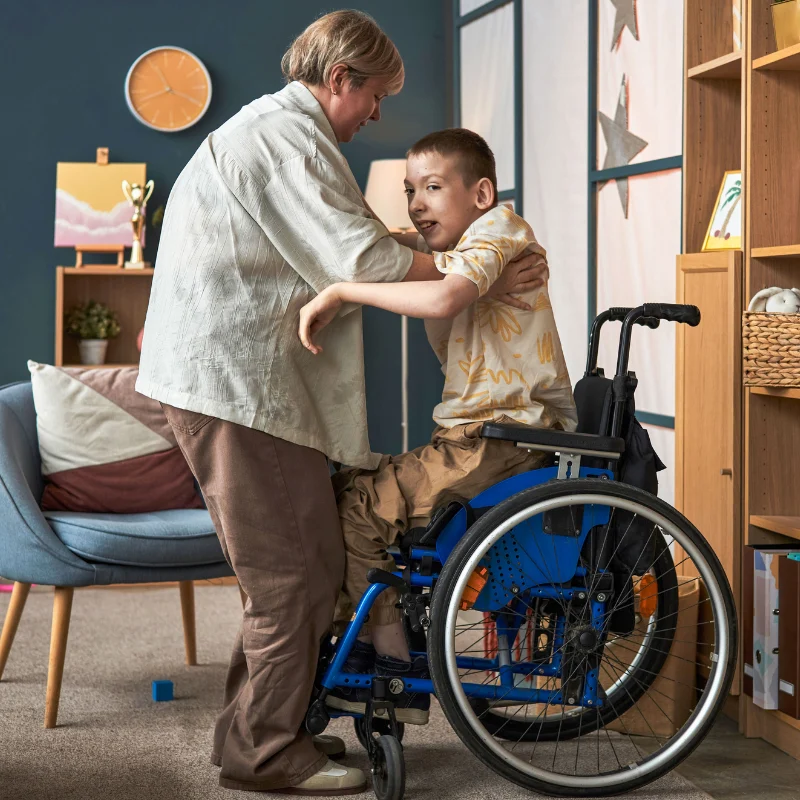
In-home complex care in Australia refers to higher-level support for people with significant clinical needs, such as tracheostomy management, enteral feeding, ventilator support, complex wound care or seizure management. Depending on a person’s needs and circumstances, appropriately planned and supported care may allow them to receive certain health-related supports at home rather than requiring ongoing hospital or residential care.
For NDIS participants, older Australians and families considering whether complex needs can be managed at home, it is important to understand what this level of care involves, who may require it and what to look for when choosing a provider.
What counts as in-home complex care?
Under the NDIS, High Intensity Daily Personal Activities refers to supports involving specific high-risk or complex health-related tasks. These include:
- Complex bowel care, involving specific procedures to support bowel management.
- Enteral feeding and management, including support with feeding through a tube such as a PEG.
- Severe dysphagia management, where swallowing difficulties create significant risks.
- Tracheostomy management, including support with a tracheostomy and related care.
- Urinary catheter management, where specific procedures and precautions are required.
- Ventilation support, for people who require assistance with mechanical ventilation.
- Subcutaneous injections, where support involves administering medication through the subcutaneous route.
- Complex wound management, where wounds require specialised care and monitoring.
This support sits above standard personal care and is delivered by workers with participant-specific training and appropriate clinical oversight, depending on the person’s needs and the support being provided.
Who needs in-home complex care?
In-home complex care may be relevant to:
- NDIS participants with high-intensity support needs whose plans include funding for the relevant supports.
- Older Australians living with conditions that require higher-level health or personal care support at home.
- People transitioning from hospital who require ongoing support following an illness, surgery or injury, depending on their individual care needs.
- People with long-term or degenerative conditions whose support requirements may change over time and require their care arrangements to be reviewed as their needs develop.
The type and level of support required will depend on the person’s health circumstances, functional needs and the recommendations of relevant health or allied health professionals.
How is in-home complex care different from standard home care?
Standard in-home care can include personal care, domestic assistance and social support. Complex care involves additional requirements because some supports involve higher clinical risks and require specific skills and training.
Key differences can include:
- Relevant provider requirements. Registered NDIS providers delivering High Intensity Daily Personal Activities must hold the relevant registration and meet the applicable NDIS Practice Standards.
- Participant-specific training. Workers need appropriate skills and training for the specific support they are providing, including participant-specific training where required.
- Appropriate clinical input. Care arrangements should include appropriate clinical oversight based on the person’s needs and the type of support being delivered.
- Detailed documentation. Clear care plans, records and documentation help support safe and consistent delivery of complex supports.
For families, this means it is important to look beyond whether a provider offers general personal care and ask whether they have the appropriate experience, training and clinical arrangements for the specific support required.
How can in-home complex care support safety and independence?
For some people, receiving appropriate support at home can help maintain familiar routines and greater involvement in everyday life.
Potential benefits can include:
- Supporting continuity at home. Some health-related supports may be delivered at home when a person’s needs are suitable for home-based care and appropriate clinical arrangements are in place.
- Maintaining dignity and routine. Staying in a familiar environment can help people maintain their usual routines and participate in daily activities where possible.
- Building a consistent care team. Having workers who understand a person’s specific needs can support continuity and reduce the need to repeatedly explain care requirements.
- Adapting as needs change. Complex care arrangements may need to be reviewed as a person’s health, functional capacity or support requirements change.
For some clinically stable people, appropriately planned and clinically supported care may allow certain health-related supports to be delivered at home rather than requiring ongoing hospital-based care.
How is in-home complex care funded?
For NDIS participants, High Intensity Daily Personal Activities may be funded through the Core Supports budget when the participant’s plan includes the relevant supports.
Evidence used to establish or review support needs may include assessments or reports from relevant health or allied health professionals that describe the participant’s functional needs, risks and required supports.
Where a person’s needs change after their plan has been established, they may need to discuss their circumstances with their support coordinator, plan manager or other relevant professional and consider whether a plan reassessment or change is appropriate.
For eligible older Australians, nursing and other higher-level supports may be available through the Support at Home program, depending on the person’s aged care assessment, funding classification and individual care needs.
People transitioning from hospital may also have access to other arrangements depending on their circumstances and the type of support they require.
What to look for in a complex care provider
When choosing an in-home complex care provider, consider:
- Relevant registration and standards. If using a registered NDIS provider, check that they hold the appropriate registration and meet the relevant NDIS Practice Standards for the supports being delivered.
- Appropriate clinical input. Ask how care plans are developed and reviewed and which appropriately qualified health professionals are involved where required.
- Participant-specific training. Workers should have the appropriate skills and training for the particular support they provide, rather than relying solely on general care training.
- Consistent staffing. A consistent team can make it easier for workers to understand a person’s routines, preferences and specific support requirements.
- Clear escalation pathways. Families should understand what happens if a person’s needs change or an issue arises outside scheduled support.
- Regular review. Complex care arrangements should be reviewed when a person’s circumstances or support needs change.
Frequently asked questions
Is in-home complex care as safe as hospital care?
Safety depends on the person’s condition, the type of support required, the care environment and the clinical arrangements in place. For some clinically stable people, appropriately planned and clinically supported care may allow certain health-related supports to be delivered at home rather than requiring ongoing hospital-based care.
Does NDIS funding automatically cover complex care?
No. NDIS funding depends on a participant’s individual circumstances, plan and funded supports. Evidence from relevant health or allied health professionals may help demonstrate the participant’s functional needs, risks and required supports.
Can complex care needs change over time?
Yes. A person’s health and functional needs can change, which may mean their care arrangements need to be reviewed. A provider should be able to work with the person and their support network to adjust arrangements when appropriate.
What is the difference between High Intensity Daily Personal Activities and standard personal care?
Standard personal care generally covers everyday activities such as showering, dressing and other personal daily living tasks. High Intensity Daily Personal Activities involve specific higher-risk supports, such as tracheostomy management, enteral feeding, ventilation or complex wound management, which require appropriate skills, training and clinical arrangements.
Can complex care be provided at home?
In some circumstances, yes. Whether complex care can be delivered at home depends on the person’s health and functional needs, the type of support required, the home environment and whether appropriate care and clinical arrangements can be established.
Montessori Care provides in-home support for people with complex care needs across Sydney, with care arrangements tailored to each person’s needs and appropriate clinical requirements. Get in touch to discuss your situation.