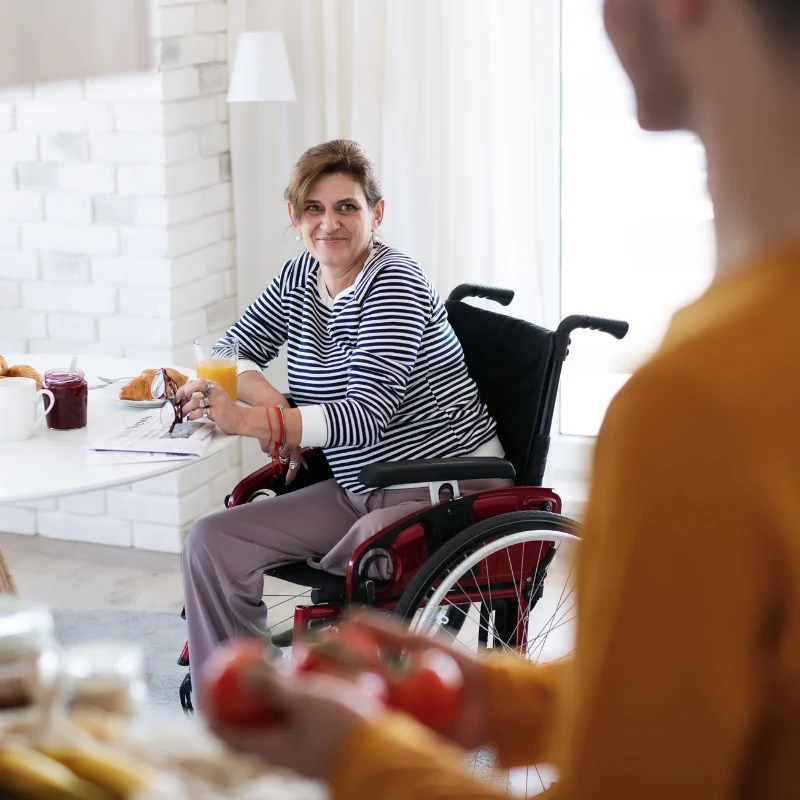
Personalised in-home disability care builds daily living skills by supporting a person to practise everyday tasks such as cooking, personal care, household routines and getting out in the community, in their own home and at their own pace, with consistent support workers who encourage independence rather than simply doing tasks for them.
For NDIS participants and family carers in Sydney, this guide explains how in-home care services in Australia can build skills, confidence and independence, and what to look for in a provider.
What are daily living skills?
Daily living skills are the everyday tasks that make independent life possible. They include:
- Personal care, such as showering, dressing, grooming and toileting
- Meal preparation, from making a snack to planning and cooking a full meal
- Household tasks, such as laundry, cleaning and tidying
- Money management, including budgeting, shopping and paying bills
- Health routines, such as taking medication on time and booking appointments
- Getting around, including using public transport and navigating the community
- Communication and social skills, such as making calls, building routines and connecting with others
Different people have different goals. For one participant it may be making breakfast independently. For another it may be travelling to work or managing a weekly budget.
Support that does for you versus support that builds skills
The same task can be supported in two quite different ways.
- Doing for: The support worker completes the task. This keeps things moving but does not build skills.
- Doing with: The support worker works alongside the participant, offering prompts, demonstrations and encouragement while the participant does as much as they can.
Both have a place. On a tiring day, or for tasks that are not a current goal, doing for can be the right choice. But when a participant’s goal is greater independence, support should lean toward doing with, so skills develop over time and support needs can reduce where that is the aim.
How personalised in-home care builds skills and confidence
It starts with the person’s goals. Support is built around what the participant wants to achieve, whether that is cooking alone, travelling independently or managing household tasks, rather than a standard schedule of services.
It happens in the real environment. Practising in your own kitchen, bathroom and neighbourhood is more effective than practising in an unfamiliar setting, because the skills transfer directly to daily life.
It breaks tasks into manageable steps. A skill like cooking a meal can be split into smaller parts, such as choosing a recipe, shopping, preparing, cooking and cleaning up. Each step can be learned in turn, so progress is visible and achievable.
It uses consistent support workers. Familiar workers know the participant’s pace, communication style and preferred way of learning, so they can encourage at the right moments and step back at the right times.
It builds confidence through small wins. Completing a task independently, even a small one, builds the confidence to try the next. Good support recognises and celebrates these steps.
It respects choice and dignity. Participants choose which skills to work on, how they like to do things and when they want help. Support is offered as an option, not imposed.
It adjusts over time. As skills grow, support can change, whether that means stepping back on a task that has been mastered or moving to a new goal.
Examples of skill-building support at home
- Learning to cook. Starting with simple snacks and working up to planning and preparing a full meal, with a support worker offering prompts and safety guidance.
- Building a morning routine. Using checklists, visual prompts or timers to build a consistent routine for getting up, dressing and preparing for the day.
- Managing money. Practising budgeting, shopping lists and using a bank card, with support to build confidence step by step.
- Travelling independently. Practising a public transport route together, then gradually stepping back until the participant can travel alone.
- Managing health routines. Setting up systems for medication, appointments and communicating with health providers.
- Household independence. Learning to use appliances safely, keep a cleaning routine and organise the home.
How this connects to independent living support
Building daily living skills is often a stepping stone toward greater independence, including for participants who hope to live more independently in future. Even for those who will always need some support, building skills can increase choice, reduce reliance on others for everyday tasks and improve confidence and wellbeing.
How NDIS funding can support daily living skills
For NDIS participants, daily living skills can be supported through different parts of a plan, depending on goals and assessed needs.
- Assistance with daily life, which can include support with personal care, household tasks and community participation.
- Capacity building supports, which can include therapy and skill-building aimed at improving independence over time.
How these are funded depends on the individual plan, so check your plan or speak with a support coordinator or provider about what applies to you. Funding rules are reviewed regularly, so confirm current details with the NDIS.
The same principles apply across other in-home care
Skill-building and independence are not only relevant to disability support. The same approach applies across in-home care services in Australia.
- In-home aged care. Older Australians can keep and rebuild skills with the right support, such as practising meal preparation after a period of illness or relearning routines to stay safely at home.
- Dementia care at home. Familiar routines, consistent carers and tasks broken into simple steps help people living with dementia keep doing what they can for as long as possible.
- Post-hospital recovery care. After a hospital stay, short-term support can help rebuild strength and confidence with daily tasks, then step back as independence returns.
What to look for in a provider
- A goal-first approach. Look for a provider that asks what you want to achieve before proposing a schedule.
- Consistent support workers. Ask how the provider keeps the same workers with the same participants.
- Skill-building experience. Ask how workers are trained to support learning, and how progress is tracked and reviewed.
- Regular reviews. Ask how often support is reviewed against your goals and how changes are made.
- Coordination with therapists. Where an occupational therapist or other allied health professional is involved, ask how the provider works alongside them.
- Clear communication. Look for a named contact who knows your goals and keeps you updated.
- Transparent pricing. Ask for an itemised breakdown of costs before you sign.
Frequently asked questions
Can in-home care really help build independence?
Yes. When support is built around a participant’s goals and focused on doing with rather than doing for, it can build skills, confidence and independence over time.
What if progress feels slow?
Progress varies between people and between skills. Small steps count, and regular reviews help adjust the approach if something is not working.
Does building skills mean support will be cut?
Not necessarily. Support is based on a person’s needs and goals. Building skills can change what support looks like, but needs are reviewed fairly, and some people will always need support.
Can family carers be involved in skill-building?
Yes. Family carers can share what works, practise routines between visits and help celebrate progress, in a way that suits the participant.
Can this support work alongside therapy?
Yes. Support workers can reinforce strategies from occupational therapists and other allied health professionals in everyday routines.
Montessori Care provides personalised in-home disability care across Sydney, with consistent support workers who help participants build skills, confidence and independence at home. Call 1300 918 000 or visit www.montessoricare.com.au to talk through your goals.