
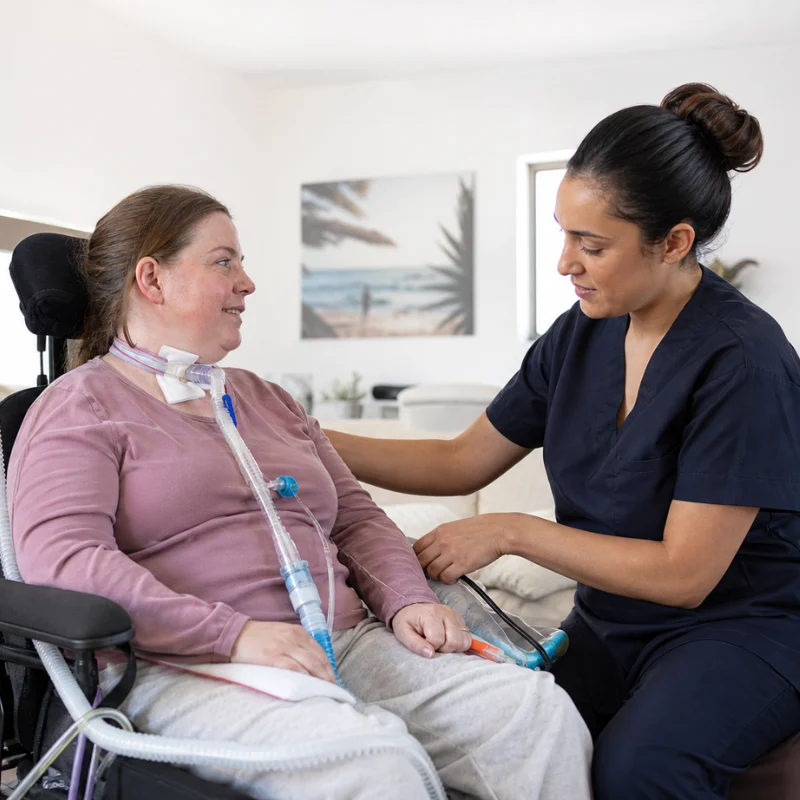
24-hour home care provides round-the-clock support at home for Australians with high-dependency needs, whether recovering from a serious hospital admission, living with advanced dementia, or managing complex clinical conditions, giving families a safe alternative to residential care while keeping the person in familiar surroundings.
Here is what 24-hour and high-dependency home care actually involves, who it suits, and what to check before arranging it.
What is 24-hour home care?
24-hour home care means support is available around the clock, either through live-in carers or rotating shifts, rather than scheduled visits during set hours. It is generally used when needs are frequent, unpredictable, or carry enough risk that gaps in supervision are not safe.
Two common models exist:
- Live-in care, where one or two carers reside in the home on a rotating basis, providing continuous presence with defined rest periods.
- Shift-based 24-hour care, where multiple carers work rostered shifts to provide continuous coverage, often used for higher clinical needs requiring different skill sets across the day and night.
Who needs 24-hour or high-dependency care?
- People recovering from major surgery or serious illness, where the first weeks after hospital discharge involve high fall risk, frequent clinical monitoring, or overnight care needs.
- People with advanced dementia, where wandering, disorientation or overnight agitation make unsupervised periods unsafe.
- People with complex clinical needs, such as tracheostomy management, ventilator support or frequent seizure monitoring, where clinical risk exists at any hour.
- People with rapidly changing conditions, where needs can shift quickly and continuous oversight allows faster response than scheduled visits would.
- Family carers reaching capacity, where the physical and emotional demands of providing overnight care themselves have become unsustainable.
How does 24-hour care support safe recovery and independence?
- Continuous clinical oversight reduces risk. For post-hospital recovery in particular, overnight monitoring of pain, mobility and wound status catches problems earlier than periodic visits would.
- Consistent presence supports dementia care. Round-the-clock, familiar carers reduce the confusion and distress that often intensifies for people with dementia during the evening and overnight hours.
- Complex clinical tasks are covered at any hour. Conditions requiring tasks like suctioning, feeding schedules or medication at set intervals are managed properly regardless of time of day.
- Family carers get genuine rest. Continuous professional care allows family members to step back from overnight duties, which is often the most exhausting part of caregiving, while remaining closely involved during the day.
- Independence is still supported, not replaced. Good 24-hour care still centres on the person’s own routine, choices and preferences. Constant presence supports safety, it does not mean constant intervention.
24-hour care versus residential high-dependency facilities
Residential facilities provide continuous care within a shared, institutional setting. 24-hour home care provides the same level of oversight within the person’s own home. The key differences families weigh up are:
- Environment. Familiar surroundings tend to support better outcomes for both recovery and dementia, particularly reducing disorientation.
- Continuity of carers. Home-based 24-hour care can offer a smaller, more consistent team than a facility with rotating shift staff across many residents.
- Cost structure. Costs differ significantly based on funding pathway, hours required and whether live-in or shift-based care is used, so a direct comparison needs to be based on your specific situation.
- Flexibility to step down. Home-based 24-hour care can reduce to part-time support as needs decrease, without the disruption of transitioning out of a facility.
How is 24-hour home care funded?
- Aged care, through Support at Home, can fund higher levels of care for people with high assessed needs, though very intensive 24-hour arrangements may combine funded hours with privately arranged additional support.
- NDIS, for eligible participants, can fund 24-hour support where assessed needs justify it, often as part of Supported Independent Living or high intensity daily personal activities funding.
- Transition or post-hospital arrangements may include short-term, intensive support funded differently to ongoing long-term care, so it is worth clarifying whether an initial period of 24-hour care is transitional or expected to continue.
Funding levels and eligibility criteria are reviewed by government regularly, so confirm current details with My Aged Care, the NDIS or your provider before finalising a plan.
What to look for in a 24-hour home care provider
- Clear staffing model. Understand whether care is live-in or shift-based, and how the provider ensures continuity of carers rather than constantly rotating unfamiliar staff.
- Clinical governance for complex needs. Confirm registered nurse oversight and competency-based training for any high intensity clinical tasks involved.
- Realistic rostering. Ask how the provider manages carer fatigue and rest periods, since this affects both care quality and staff retention.
- Clear escalation procedures. Understand exactly what happens if a clinical situation changes overnight or on a weekend.
- Flexibility to scale down. Since 24-hour care is often needed most intensively in an initial period, check how easily the arrangement adjusts as needs reduce.
Frequently asked questions
Is 24-hour home care always live-in care?
No. It can be delivered through live-in carers or through rostered shifts with different carers covering different times, depending on the level and type of need.
Is 24-hour home care only for end-of-life or very advanced conditions?
No. It is also used for defined recovery periods after hospital discharge, or for conditions with unpredictable but manageable risk, not only for advanced or end-of-life care.
How is 24-hour care different from a few extra hours of support each day?
24-hour care provides continuous coverage with no gaps, which matters specifically when risk exists at any hour, such as overnight falls, dementia-related wandering or clinical monitoring needs, rather than being simply an extension of daytime hours.
Can 24-hour care reduce over time as recovery progresses?
Yes. A well-structured plan reduces hours gradually as clinical risk decreases or recovery milestones are met, rather than requiring a full restart of the arrangement.
Montessori Care provides 24-hour and high-dependency home care across Sydney, with consistent carers and registered nurse oversight for complex recovery, dementia and clinical needs. Get in touch to discuss your family’s situation.